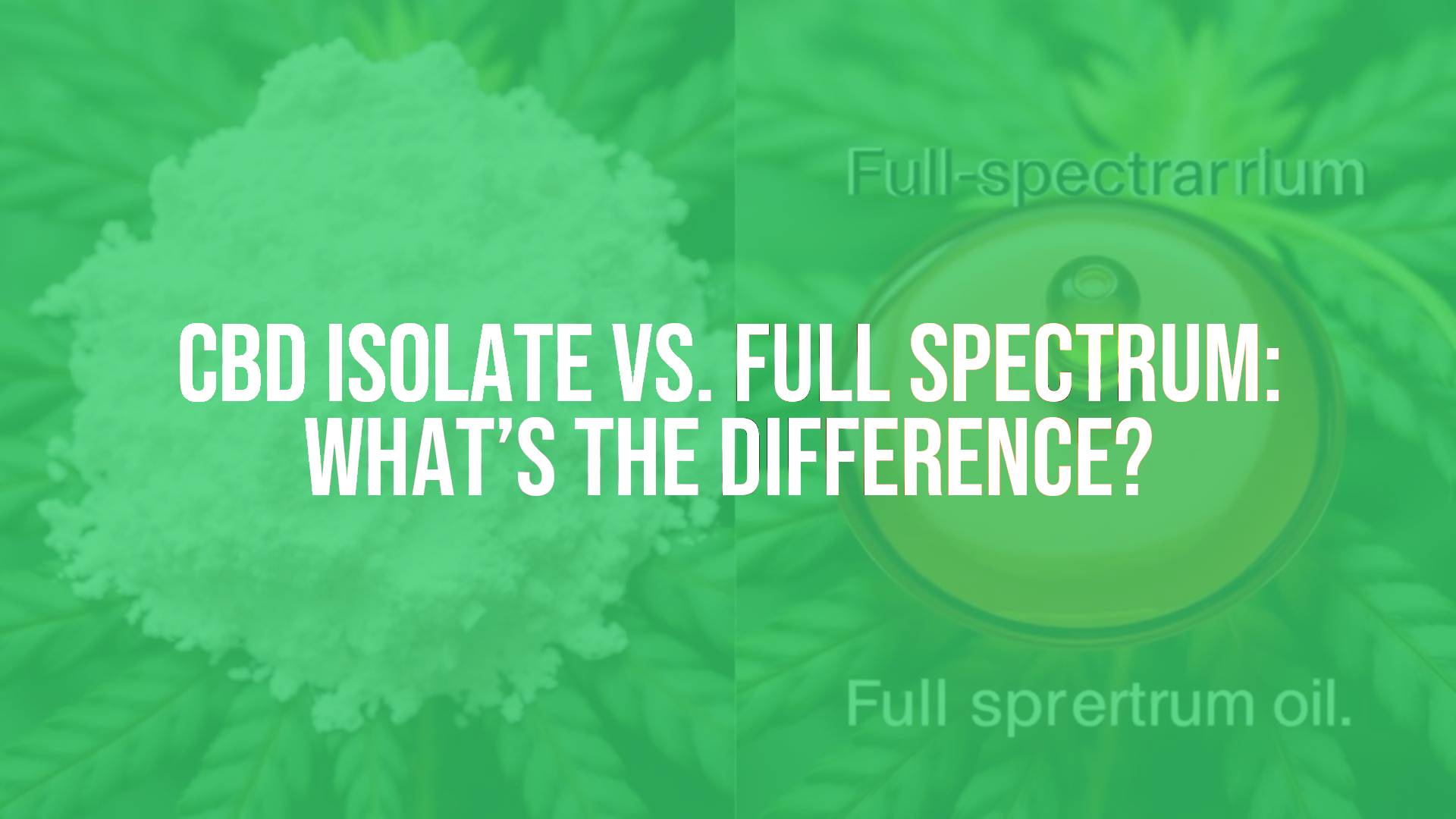
When you first start learning about CBD, you’ll quickly see two main terms: CBD isolate and full-spectrum CBD. These are not just marketing labels. They describe how the product is made and what it contains. CBD isolate is almost pure CBD and nothing else. Full-spectrum CBD keeps many of the other natural parts of the cannabis plant. Which one suits you best depends on your goals, how your body reacts to different compounds, and what kind of effects you want.
Knowing how these types differ is key if you plan to add CBD to your daily routine. Whether you’re new to CBD and curious about help with pain or anxiety, or you already use CBD and want more specific results, understanding each type will help you choose wisely. Let’s take a clear look at CBD isolate, full-spectrum, and the middle option-broad-spectrum-so you can see how they compare and which might fit your needs.

CBD Isolate vs Full Spectrum: Key Differences
Most CBD products fall into three main groups:
- CBD isolate
- Full-spectrum CBD
- Broad-spectrum CBD
These groups are based on which plant compounds remain in the final product. That mix of compounds changes how the product might feel and who it suits best. The key difference between CBD isolate and full-spectrum CBD is the presence of other cannabinoids, terpenes, and plant compounds that come from cannabis.
What is CBD Isolate?
CBD isolate is the purest form of CBD you can buy. Imagine taking an extract from the hemp plant and refining it until you are left with only CBD. That is CBD isolate. It usually contains 99% or more CBD, with almost no other cannabinoids, terpenes, or plant material.
This high purity also means CBD isolate has no THC, the compound that causes the “high” from cannabis. It usually looks like a white, crystal-like powder (often called CBD crystals). It has no real taste or smell, which makes it easy to mix into foods, drinks, or skin products without changing their flavor.
CBD isolate is appealing for people worried about drug tests or who are very sensitive to THC. It lets you use CBD for possible calming, anti-inflammatory, or pain-relieving effects without taking in other cannabis compounds. Some people feel that using CBD on its own might limit its full potential compared with products that keep more plant compounds, but others prefer the control and simplicity it offers.
What is Full Spectrum CBD?
Full-spectrum CBD is the opposite of isolate in many ways. Instead of removing everything but CBD, it keeps a wide range of natural plant compounds. This includes:
- Several cannabinoids (CBD, CBG, CBC, and small amounts of THC)
- Terpenes (which give the plant its smell and flavor)
- Flavonoids (which may have antioxidant effects)
These compounds are thought to work together and support one another’s effects, a concept called the “entourage effect.”
Full-spectrum CBD made from hemp usually has up to 0.3% THC. This level is low and not likely to cause a strong “high,” but it can still matter for people who face drug tests. Many users choose full-spectrum products because they believe the mix of compounds may offer stronger or broader benefits-for example, better pain relief, anti-seizure support, or reduced anxiety. It is also seen as a more “whole plant” and less stripped-down option compared with isolate.
How Do Broad Spectrum Products Compare?
Broad-spectrum CBD sits between isolate and full-spectrum. It starts out like full-spectrum, with many plant compounds, and then goes through an extra step to remove all detectable THC.
Broad-spectrum CBD keeps several cannabinoids, terpenes, and flavonoids, but without THC. People often choose it when they want some of the combined effect of many compounds while avoiding any THC exposure. Some people believe that removing THC might slightly reduce the full “entourage effect” compared with true full-spectrum products, but broad-spectrum can still offer a wider mix than isolate.
Broad-spectrum is a good pick for people who are sensitive to THC or must avoid it for job or legal reasons, but who still want more than just CBD alone. You can find broad-spectrum in oils, tinctures, gummies, capsules, and creams or balms.
What is the Entourage Effect?
The “entourage effect” is the idea that cannabis compounds work better together than alone. In other words, CBD, THC, terpenes, and flavonoids may interact in the body in a way that increases their overall effects and may reduce some side effects.
For example, some terpenes might boost CBD’s anti-inflammatory actions, while others may soften some of THC’s mind-altering effects. This concept was put forward in the late 1990s by researchers Shimon Ben Shabat and Raphael Mechoulam when looking at how our natural endocannabinoids interact with other molecules. Later work, including by Elizabeth Wilson, applied the idea more directly to cannabis plant compounds.
Research, including a 2015 animal study, suggests that while CBD isolate can help with certain issues, full-spectrum CBD may offer stronger results in some cases. In that study, full-spectrum CBD showed a wider and more powerful effect on pain and inflammation compared with isolate. This is a big reason why many people and some researchers prefer full-spectrum or broad-spectrum products.

How Are CBD Isolate and Full Spectrum Made?
Both CBD isolate and full-spectrum CBD start with the same raw material: the hemp plant. The differences show up during extraction and later cleaning steps. These steps shape what remains in the final product.
Extraction Methods Explained
The first step for both types is to pull useful compounds out of the plant. Common extraction methods include:
- CO2 extraction
- Ethanol extraction
- Steam distillation
- Lipid (oil-based) extraction
CO2 extraction uses pressurized carbon dioxide to draw out cannabinoids and other compounds. It is considered very efficient and “clean,” as it doesn’t require harsh chemical solvents. Ethanol extraction soaks the plant in alcohol to dissolve the cannabinoids. Both CO2 and ethanol methods can keep a wide mix of cannabinoids and terpenes, which is helpful for full-spectrum products, and they are set up so no harmful solvent should remain in the final oil.
The first extract from these methods is usually a thick, dark oil filled with many of the plant’s natural compounds.
Refinement Processes
After extraction, the process begins to differ for full-spectrum CBD and CBD isolate.
For full-spectrum CBD, the goal is to keep as much of the plant profile as possible while removing things like chlorophyll and waxes that are not wanted. This usually involves filtering out plant solids. The mix of cannabinoids, terpenes, and flavonoids stays largely in place. During this process, producers also make sure the THC level stays within legal limits (usually under 0.3% in hemp products).
CBD isolate goes through more steps to reach its high purity. After the initial extraction, common steps include:
- Winterization: The extract is mixed with ethanol and frozen. Fats, waxes, and chlorophyll harden and can be filtered out.
- Distillation: Different compounds are separated based on their boiling points to concentrate cannabinoids.
- Chromatography: This step separates CBD from other cannabinoids and remaining compounds.
The result is a CBD product in crystal or powder form, usually 99%+ pure, with no THC and almost no other plant material.

Benefits of CBD Isolate
CBD isolate offers clear benefits for people who want CBD on its own, with no extra plant compounds or THC.
THC-Free Usage
The most obvious advantage of CBD isolate is that it contains no THC at all. For some people, this is non-negotiable-whether due to personal choice, strict workplace rules, or very low tolerance for THC.
Even though full-spectrum hemp products only contain up to 0.3% THC, these small amounts can build up in the body with regular use. In rare cases, this may show up on a drug test. With CBD isolate, this risk is removed.
Some people also feel light psychoactive effects or anxiety even from tiny amounts of THC. For them, CBD isolate offers a way to try CBD’s possible calming or pain-relieving effects with no risk of THC-related feelings. They can feel relaxed while staying clear-headed.
Purity and Potency
CBD isolate is at least 99% pure CBD. This means you know exactly what you are taking. For people who track their dose carefully, this can be very helpful.
One 2015 animal study suggested that CBD isolate may have a more narrow “dose window” for some effects like pain relief, while full-spectrum CBD showed stronger results as doses went up. Still, the purity of isolate makes it easier to measure and adjust your personal dose. This can be useful in clinical settings or for individuals who follow a strict wellness plan. The lack of other compounds also makes isolate nearly tasteless and odorless, which is ideal when you want to add CBD to foods, drinks, or skincare without changing how they smell or taste.
Potential Applications for CBD Isolate
Because it is pure and THC-free, CBD isolate is flexible and can be used in many ways. It is often suggested for people new to CBD who want to test how they respond to CBD alone.
Common uses include:
- Mixing with carrier oils to make simple CBD oil at home
- Adding to lotions or balms for muscle or joint relief
- Stirring into drinks or recipes for CBD edibles
Research points to possible benefits such as calming effects, help with anxiety symptoms, anti-inflammatory effects, and support for chronic pain and muscle recovery. While it does not offer the full “entourage” mix of compounds, it still provides the direct effects of CBD. For people who value purity, exact dosing, and a THC-free product, CBD isolate is a strong option.
Benefits of Full Spectrum CBD
Full-spectrum CBD keeps many natural compounds from the hemp plant. Many people choose it because they believe this broader mix offers a stronger and more natural effect.
Harnessing the Entourage Effect
The main benefit of full-spectrum CBD is that it includes the full “team” of cannabinoids, terpenes, and flavonoids. The entourage effect suggests these compounds can support and boost each other’s actions. Terpenes may add anti-inflammatory or antioxidant support, while other cannabinoids like CBN, CBG, and CBC may also play smaller but helpful roles.
Because of this combined action, full-spectrum CBD may be more effective for some people than CBD isolate. Studies and user reports suggest that this type may work better for certain kinds of pain and other symptoms. A 2018 study, for example, found that full-spectrum CBD offered better pain relief than isolate, likely due to the small amount of THC and other compounds working alongside CBD.
Potential for More Comprehensive Symptom Support
Thanks to its wider mix of compounds, full-spectrum CBD is often linked with broader symptom support. People use it to help with:
- Chronic pain and inflammation
- Anxiety or stress
- Muscle spasms
- Seizure disorders (in some medical contexts)
Full-spectrum CBD products also may have antioxidant and nerve-protecting properties. The trace THC (under 0.3%) is believed to help activate the endocannabinoid system more completely, which can give some users a deeper and more balanced experience. Many people also like that full-spectrum CBD is closer to the plant’s original form and fits well with a “whole plant” wellness approach.
Comparing Potential Side Effects and Safety
Both CBD isolate and full-spectrum CBD are usually well-tolerated, but they do differ in some safety and side-effect points, mostly due to THC and the extra plant compounds present in full-spectrum products.
Is Full Spectrum CBD More Likely to Cause Side Effects?
Full-spectrum CBD includes more plant compounds, including a small amount of THC. While under 0.3% THC is unlikely to cause a strong high, it can still lead to:
- Mild psychoactive feelings in very sensitive people
- A small risk of showing up on a drug test with regular use
Because full-spectrum products contain various terpenes and flavonoids, there is also a slightly higher chance of allergic reactions or sensitivities, though this is uncommon.
CBD isolate contains no THC and almost nothing other than CBD. This greatly lowers the chance of THC-related effects or a THC-positive drug test. It may also be safer for people who have known allergies to plant oils or certain terpenes, as those compounds are removed.
Who Should Avoid Full Spectrum or Isolate?
Your personal situation will guide which type might not be suitable. For example:
- People who must avoid THC completely: This includes workers in roles with strict drug testing (such as pilots, truck drivers, or some healthcare workers) and anyone with legal or personal reasons to avoid THC. CBD isolate is usually the safest choice here. Broad-spectrum may also work, but in unregulated markets, there is a small chance of trace THC, so isolate offers the highest certainty.
- People sensitive to THC: If you feel anxious, dizzy, or “off” even from very small amounts of THC, CBD isolate will likely suit you better.
- People with plant compound allergies: If you know you react to certain terpenes or similar plant compounds, the simple profile of CBD isolate may lower that risk.
On the other hand, people who prefer the possible extra benefits of the entourage effect and are not worried about tiny amounts of THC may want to skip isolate and choose full-spectrum instead. If you have health issues or take other medications, talk with a doctor or healthcare provider before starting any CBD product. They can help you pick a type and dose that fits your situation.
Cost and Accessibility: Is Full Spectrum or Isolate Cheaper?
Price is often a deciding factor when choosing between CBD isolate and full-spectrum CBD. In many cases, CBD isolate is a bit cheaper per milligram of CBD.
Production steps, market demand, and how the product is positioned all play a role:
| Factor | CBD Isolate | Full-Spectrum CBD |
|---|---|---|
| Plant profile | Almost pure CBD only | CBD plus other cannabinoids, terpenes, flavonoids |
| Processing steps | More purification, targeted at CBD alone | Less purification, focus on keeping broad plant mix |
| Perceived value | Simple and precise | Often seen as more “complete” due to entourage effect |
| Typical price | Often lower | Often higher |
Although isolate goes through more purification, producers can focus on just one compound and scale that process. Full-spectrum products, on the other hand, must keep a careful balance of many compounds, which can raise handling and quality control costs. Many brands also market full-spectrum CBD as offering extra benefits, which can push prices up.
For example, you might find 250 mg CBD isolate oil starting around £15, while higher-strength full-spectrum products usually cost more. Both types are widely sold online and in health shops.
The FDA has not approved nonprescription CBD products, and studies show that some products are labeled inaccurately. Always choose brands that share third-party lab tests showing the product’s CBD and THC content and confirming it is free from heavy metals, pesticides, and solvents. In some countries, such as New Zealand, people can access both isolate and full-spectrum CBD through a doctor’s prescription, which adds an extra layer of quality control.
Which CBD Type Is Right for You?
Choosing between CBD isolate and full-spectrum CBD depends on your goals, your body, and your daily life. There is no single “best” type for everyone.
Choosing Based on Your Needs and Preferences
Ask yourself what matters most:
- Need to avoid THC completely? Pick CBD isolate. This is a good choice if you face drug tests, are very sensitive to THC, or simply do not want any THC at all.
- Want a plain product with no taste or smell? CBD isolate is hard to beat. It’s easy to mix into drinks, foods, or skincare without changing them.
- New to CBD? Many beginners start with isolate to see how they respond to CBD alone. They can later try full- or broad-spectrum if they want.
If you prefer a more “whole plant” approach and are comfortable with trace THC (under 0.3%), full-spectrum CBD might suit you better. Many users feel that full-spectrum:
- Helps more with pain, inflammation, or anxiety
- Feels “stronger” or more well-rounded at the same CBD dose
If you want the broader mix of compounds but still need to avoid THC, broad-spectrum CBD can be a good middle option.

Considerations for Drug Testing and Regulations
Drug testing and legal rules matter for many people:
- Full-spectrum CBD has trace THC. With regular use, this can sometimes lead to a positive drug test.
- CBD isolate is the safest option if you must test negative for THC.
- Broad-spectrum is often labeled “THC-free,” but small traces may still appear due to unregulated production, so always check lab reports.
In the United States, hemp-derived CBD with less than 0.3% THC is legal at the federal level, but state rules vary. The FDA does not currently approve over-the-counter CBD products, so quality can differ widely among brands.
Always:
- Read product labels carefully
- Check Certificates of Analysis (COAs) from independent labs
- Talk with a healthcare professional if you have medical conditions or take other medicines
Common Questions About CBD Isolate vs Full Spectrum
People often ask similar practical questions when choosing between isolate and full-spectrum CBD. Here are some clear answers.
Does CBD Isolate Have an Expiry Date?
Pure CBD isolate in crystal or powder form is a stable compound and does not “go bad” quickly on its own, much like sugar or salt. The issue is usually the other ingredients in finished products, such as oils or tinctures.
Most CBD oils, whether isolate or full-spectrum, are mixed with a carrier oil like hemp seed oil, MCT oil, or olive oil. These carrier oils do expire. For example, hemp seed oil often has a shelf life of about one to two years.
When the carrier oil passes its best-before date, you may notice:
- Changes in smell (rancid or “off” scent)
- Changes in color
- Thicker or strange texture
While an expired oil is not always dangerous, it may be less effective and unpleasant to use. To keep your CBD products in good condition:
- Store them in a cool, dark place
- Keep the lid tightly closed
- Avoid heat and direct sunlight
- Check the “best by” date on the label
If something smells or looks wrong, it’s safer to throw it away and buy a fresh product. Oils without preservatives, such as some hemp seed oil-based CBD oils, may expire sooner than those with added stabilizers.
What’s the Best Way to Take Each Type?
Both CBD isolate and full-spectrum CBD can be used in similar ways. The “best” method depends on how fast you want it to work, how long you want the effects to last, and what you are comfortable with.
CBD Isolate:
- Oils and Tinctures: Taken under the tongue (sublingually). Hold for about 30 seconds before swallowing. This allows faster absorption and usually has a neutral taste.
- Edibles: Isolate powder can be mixed into smoothies, coffee, or recipes. This is discreet and easy, but it takes longer to feel the effects because it goes through digestion.
- Topicals: Mixed into creams, balms, or gels for direct use on sore muscles or joints.
- Capsules: Swallowed like a pill for simple, measured dosing.
Full-Spectrum CBD:
- Oils and Tinctures: Also taken under the tongue. These often have an earthy or “hempy” taste due to terpenes. Some brands add flavors to improve taste.
- Edibles: Gummies and other snacks offer a simple, tasty way to take full-spectrum CBD. Effects start more slowly but can last longer.
- Capsules: Helpful for those who want a fixed dose without tasting the oil.
- Topicals: Creams and balms let you apply cannabinoids and terpenes directly to the skin for local relief.
For both types, holding oil under the tongue for about 30 seconds is one of the simplest and most effective ways to use CBD. From there, adjust the form and dose based on how you feel, what you like, and what fits your daily life.