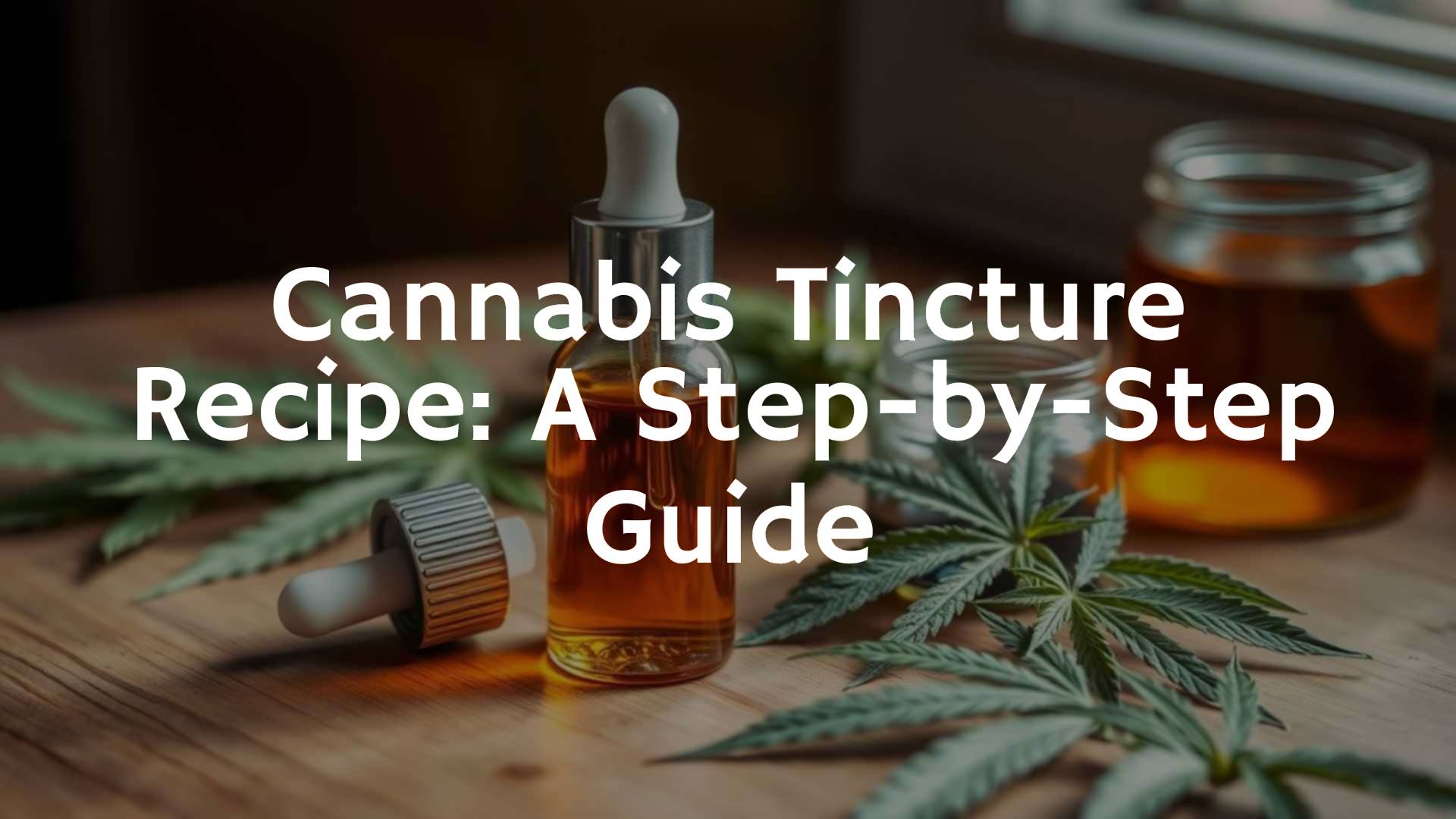
A cannabis tincture is a strong liquid extract made by soaking cannabis in a solvent such as alcohol, glycerin, or oil. This method goes back at least to 1025, when it was mentioned in “The Canon of Medicine.” The solvent pulls out key plant compounds like THC and CBD, along with terpenes and flavonoids, into a handy liquid. Making tinctures at home gives you a flexible, discreet, and efficient way to use cannabis without smoking, and it allows for accurate dosing.
Tinctures are simple to make and easy to adjust. With a few basic kitchen tools and some time, you can make a powerful, long-lasting product that suits your own needs. Whether you want fast relief or a slow, steady effect, learning how tinctures work-from what they are to how to make them step by step-gives you many options for personal cannabis use.

What is a cannabis tincture?
A cannabis tincture is a concentrated herbal liquid where the active parts of the cannabis plant are dissolved into a liquid base. You can think of it as capturing the “essence” of the plant in a bottle. Traditionally, tinctures were a key part of herbal medicine because they are effective and simple to use. The basic method is to soak dried cannabis flower in a solvent so that cannabinoids, terpenes, and other plant compounds move into the liquid. The end result is a strong, flexible product that you can take in several ways, most often under the tongue.
Strictly speaking, “tincture” means an extract made with alcohol, but many people now also use the word for oil or glycerin infusions. No matter the base, the aim is the same: a strong, easy-to-dose form of cannabis that avoids smoking or vaping. Many people like tinctures because they can get medical or wellness benefits without inhaling smoke or vapor, and without the long, hard-to-predict effects that some edibles bring.
Cannabis tincture vs. edibles and oils
Cannabis tinctures, edibles, and oils are all swallowed or taken by mouth, but they differ in how they’re made, how the body processes them, and how they feel. Knowing these differences helps you choose what fits you best.
Edibles (like brownies or gummies) are foods that contain cannabis. Once eaten, they go through your stomach and liver. In the liver, THC turns into 11-hydroxy-THC, which is stronger and longer-lasting. Effects start later-often 30-90 minutes, sometimes up to 2 hours-but they can last 4-6 hours or more and feel more intense. Because they are food, legal markets often limit the total THC per package, which can cap how strong they are.
Cannabis oils are usually made by binding cannabinoids to fats such as olive or coconut oil. You take them by mouth as well, and they can be quite strong, with a taste some people find heavy or unpleasant. Swallowed oils act like edibles: they go through digestion and the liver, with similar timing and duration of effects. CBD oils in health shops are often made by extracting CBD from hemp (with solvents like butane or CO2) and then mixing it into a carrier oil. Both tinctures and CBD oils can be used for CBD’s effects, but alcohol tinctures are not suitable for the skin, while some CBD oils are.
Tinctures, when used under the tongue, act differently. The liquid absorbs through the lining of the mouth straight into the blood, skipping the stomach and liver at first. This gives a much quicker start (about 15-45 minutes) than edibles, though the “high” may be milder. Tinctures often are not treated as food legally, so they can exceed 100 mg THC per bottle in many regions, making each bottle last longer. Droppers let you measure down to a single drop, something that’s harder with solid edibles. Even though oil-based versions are technically infusions, many people still call all liquid cannabis drops “tinctures” when taken under the tongue.

Alcohol, glycerin, and oil bases: key differences
Your choice of base liquid shapes how your tincture tastes, how strong it is, how long it lasts, and how you’ll use it. The most common bases are alcohol, glycerin, and oil.
Alcohol-Based Tinctures: The Classic “Green Dragon”
Most traditional tinctures use alcohol. High-proof food-grade ethanol (like Everclear 190 proof/95%) is very good at dissolving cannabinoids, terpenes, and other compounds from cannabis. This gives a strong extract. Alcohol also helps the tincture absorb quickly when used under the tongue, speeding up onset. Many people like neutral spirits so the cannabis flavor stands out or so they can add flavorings. Alcohol tinctures (often called “Green Dragon”) store very well and can last for years if kept correctly. Some people dislike the sting of strong alcohol under the tongue, and high-proof alcohol is highly flammable, so never heat it directly.
Glycerin-Based Tinctures: Sweeter and Softer
Glycerin is a good choice for people who avoid alcohol. Food-grade glycerin, usually made from plant oils like coconut or soy, is colorless and odorless, with a mild, sweet taste and thick texture. These tinctures are popular in edibles and for people with sensitive taste or alcohol intolerance. Glycerin, however, does not extract cannabinoids as efficiently as alcohol, so tinctures made this way are often weaker. The process is slower and usually done at room temperature or with gentle warmth. Glycerin tinctures also don’t last as long: stored in the fridge, they usually keep for about 3-6 months.
Oil-Based Tinctures: Gentle and Flexible
Oil-based tinctures (technically infusions) use oils such as MCT, olive oil, or coconut oil. Because cannabinoids are fat-soluble, they mix well with these oils. MCT oil is popular due to its neutral taste and good sublingual absorption. Olive oil is great if you want to cook with the tincture. Oil infusions suit people who want mild, easy-to-handle doses and can also be used on the skin in some cases. Oils are less efficient than alcohol at pulling out compounds, so they may be less strong. In the fridge, they usually last 6-12 months, but you should discard them if they smell rancid.
Benefits of cannabis tinctures
Cannabis tinctures have been used in herbal medicine for hundreds of years because they offer many advantages. They’re efficient, quiet to use, and flexible, making them different from smoking, vaping, or standard edibles. For many people, they provide a controlled and practical way to use cannabis.
A key benefit is that tinctures can hold a wide range of cannabis compounds. If made well, they include THC, CBD, and other cannabinoids, plus terpenes and flavonoids. Together, these can create what’s called the “entourage effect,” where the mix works better than single compounds alone. Tinctures also usually avoid common food allergens (like gluten or certain additives), so they’re friendlier for people with dietary needs.
Fast onset and easy dosing
A major advantage of tinctures is the mix of fast-acting effects and easy, precise dosing. This is helpful if you want quick relief or steady medical benefits through the day.
Used under the tongue, tinctures move quickly into the blood through the many blood vessels under and around the tongue. Because they skip digestion and first-pass liver processing at the start, they can take effect within 15-45 minutes. This speed is helpful for issues like sudden pain, anxiety, or nausea. You simply place the chosen number of drops under your tongue, hold them for 30-60 seconds, then swallow.
Dosing is straightforward. Tinctures usually come in dropper bottles, so you can count by the milliliter or even by the drop. This is especially helpful for beginners or anyone adjusting a medical dose. You can start with something very small (for example, 2-5 mg THC or about a quarter dropper) and slowly increase until you reach the effect you want. This “start low and go slow” method reduces the chance of taking too much and helps you find your best dose.
Discretion and flexibility
Tinctures are one of the quietest and most flexible ways to use cannabis. Unlike smoking or vaping, they produce no smoke, no vapor, and almost no smell.
The bottles are small and look like ordinary supplement or skincare droppers, so you can carry them anywhere without drawing attention. When closed, they don’t smell like cannabis, and using a dropper under your tongue is quick and subtle. This is useful at work, when traveling, or in social settings where you don’t want to stand out-or where smoking is not allowed.
Tinctures are also flexible in how you use them. While under-the-tongue use is fastest, you can add them to food or drinks if you prefer a slower effect or want to mask the taste. Mix them into coffee, tea, smoothies, or even salad dressing. Because tinctures usually have few ingredients besides the cannabis extract and base liquid, they often avoid common problem ingredients found in many edibles.
Full-spectrum effect potential
Well-made tinctures, especially full-spectrum ones, can deliver a strong “entourage effect.” Full-spectrum means the extract keeps many of the plant’s compounds instead of isolating one.
In a full-spectrum tincture you’ll find several cannabinoids (THC, CBD, CBG, CBN, etc.), each with its own effects on the body’s endocannabinoid system. Terpenes give the plant its smell and taste and can also support things like mood or inflammation relief. Flavonoids add to overall health effects too.
This mix can give a smoother, more balanced experience compared to products that contain only CBD or THC. Many people report better pain control, less anxiety, and improved sleep with full-spectrum products. In contrast, broad-spectrum (THC removed) or isolate (single compound) products can work well for some needs, especially when avoiding THC, but full-spectrum tinctures give you a broader plant profile.
Risks and considerations with cannabis tinctures
While tinctures offer many benefits, they still contain active cannabis compounds and should be used with care. Some people may experience side effects, and certain groups should avoid or limit use. Learning about the possible downsides helps you use tinctures more safely.
A key issue with homemade tinctures is figuring out how strong they are. Unlike products from licensed producers, home batches rarely come with lab-tested labels. Potency depends on strain, method, and plant-to-solvent ratio. This can make consistent dosing hard. To reduce risk, always start with a small amount, especially when trying a new batch.
Potential side effects
Even though tinctures allow for careful dosing, they can still cause side effects, especially at high doses or in people who are sensitive to THC.
Common THC-related side effects include:
- Dry mouth (“cottonmouth”)
- Dry or red eyes
- Drowsiness or fatigue
- Dizziness
- Short-term memory issues or trouble focusing
- Altered sense of time
At higher doses, some people may feel:
- Increased anxiety or panic
- Paranoia
- Faster heart rate
- Mild hallucinations or strong sensory changes
These reactions are usually temporary but can be unpleasant. Also remember that swallowed tincture is processed by the liver into 11-hydroxy-THC, which is more potent. This can lead to stronger, longer effects, similar to edibles, and can surprise users expecting only mild sublingual effects.
Who should avoid tinctures?
Tinctures are not right for everyone. Some people should be very cautious or avoid THC-bearing tinctures completely.
Groups that should avoid or talk to a doctor before using cannabis tinctures include:
- Pregnant or breastfeeding people: Cannabinoids can affect fetal and infant development, and safety is not well established.
- People with heart disease, serious anxiety disorders, or psychosis: THC may worsen these conditions.
- Underage users: The growing brain is sensitive to cannabinoids, and early use can affect development.
- Anyone driving or using machinery: THC can slow reaction times and impair judgment, even if you “feel fine.”
- Those on certain medications: Cannabis can change how some drugs are processed, possibly increasing side effects or changing drug levels.
If you have health concerns or take regular medication, talk with a healthcare professional who knows your history before adding tinctures.

Cannabis tincture recipe: step-by-step guide
Making your own cannabis tincture is a satisfying project that gives you control over ingredients, strength, and effects. You don’t need advanced lab tools-just basic equipment, patience, and a careful approach. Below is a full walk-through from strain choice to bottling.
The main idea is simple: move the useful compounds from the plant into a liquid. A few steps, especially decarboxylation (“decarbing”), greatly affect potency and flavor. Pay close attention to heat and timing so you get the effect you want.
Choosing a strain: THC, CBD, indica, or sativa
Choosing which cannabis strain to use will largely decide how your tincture feels. There is no single “best” strain-it depends on what you want.
THC vs. CBD:
- High-THC strains: Good if you want a noticeable “high,” strong euphoria, deep relaxation, or heavy pain relief.
- High-CBD strains: Better if you want benefits like reduced inflammation, less anxiety, or pain relief without feeling intoxicated.
- Sativa-dominant: Often described as energizing, uplifting, and more mental-good for daytime, mood, and creativity.
- Indica-dominant: Often more body-heavy, relaxing, and sedating-good for evenings, winding down, or sleep.
- Hybrids: Mix traits from both; balanced hybrids can be versatile and are a nice starting point for many people.
Pick a strain you already know and like if possible. Think about your goals-relaxation, sleep, mood boost, focus, pain control-and choose a strain that matches that profile. Checking lab results or descriptions from a trusted source can help you match the cannabinoid and terpene content to your needs.
Selecting the right base: alcohol, oil, or glycerin
Your base liquid affects strength, taste, storage, and how you plan to use the tincture.
Alcohol (Ethanol)
- Best for: maximum strength, long storage, fast sublingual effects.
- Use high-proof food-safe alcohol (e.g., Everclear 190 proof/95%). Higher proof equals better extraction.
- Downside: strong taste and burn; flammable and must be handled carefully.
Oil (MCT, olive, coconut)
- Best for: alcohol-free option, cooking, gentle taste.
- MCT oil: neutral taste, good for sublingual use.
- Olive or coconut oil: great for cooking or skin use.
- Usually somewhat weaker than alcohol tinctures and shorter shelf life (refrigerated 6-12 months).
Glycerin
- Best for: alcohol-free, sweeter taste, use in edibles.
- Least efficient at pulling cannabinoids, so often less strong.
- Shortest life span: about 3-6 months in the fridge.
Think about how strong you want the tincture, how you plan to use it (under the tongue, in food, or both), and any dietary limits when you choose your base.
Essential ingredients and equipment list
Before you start, gather what you need so the process goes smoothly.
Ingredients
- Dried cannabis flower: Common starting point is:
- 1 oz (28 g) flower per 2.5 cups (590 mL) solvent for a strong batch, or
- 3.5-14 g flower per 3-12 fl oz solvent for a milder batch.
- Base liquid:
- High-proof food-grade alcohol (e.g., Everclear 190) for alcohol tinctures.
- MCT, olive, or coconut oil for oil infusions.
- Food-grade glycerin for glycerin tinctures.
- Optional: sunflower lecithin: Helps blend and may improve how well your body uses the cannabinoids, especially with oil.
Equipment
- Digital scale (for accurate cannabis measurements)
- Grinder (for even plant size)
- Baking sheet and parchment paper (for decarboxylation)
- Oven thermometer (to keep oven temperature in the right range)
- Mason jars (for infusing and storage; glass is best, especially with alcohol)
- Fine mesh strainer, cheesecloth, or coffee filters (for straining)
- Dropper bottles (1 fl oz / 30 mL dark glass is common)
- Small funnel (to fill bottles without spills)
- Labels (to record strain, base, date, and estimated strength)
- Crock-Pot or slow cooker (for oil or glycerin infusions)

Decarboxylation: activating cannabinoids
Decarboxylation (“decarbing”) uses heat to turn THCA into THC and CBDA into CBD. Raw flower is mostly in these acid forms, which are not intoxicating. If you skip decarbing, your tincture will mostly have THCA and CBDA and will feel very mild or simply different.
To activate cannabinoids properly without burning them, follow this method:
- Preheat oven: Set to 220-240°F (105-115°C). Use an oven thermometer for accuracy.
- Grind cannabis: Use a medium-coarse grind. Avoid powder; it’s hard to strain and makes the tincture more grassy-tasting.
- Prepare tray: Line a baking sheet with parchment paper.
- Spread cannabis: Lay it out in a thin, even layer on the tray.
- Bake: Heat for 30-50 minutes. The flower should look dry and lightly toasted, not dark or burnt.
- Cool: Let the decarbed cannabis cool completely before infusing.
Infusing cannabis: alcohol-based, oil-based, and glycerin-based methods
Once your cannabis is decarbed, you can infuse it into your chosen base. Each method is slightly different.
Alcohol-based tincture (Green Dragon)
- Combine ingredients: Put decarbed cannabis in a Mason jar. Use about 1 oz (28 g) per 2.5 cups (590 mL) alcohol for a strong batch, or an eighth (3.5 g) per 3 fl oz for a lighter one. Make sure the plant material is fully covered.
- Seal and store: Close the jar tightly and place it in a cool, dark spot.
- Infuse: Let sit for at least 2-3 weeks and up to 30 days or more for stronger extraction.
- Shake daily: Gently shake once a day to help the alcohol reach all the plant material.
- Fast-wash option: For a quicker method, freeze both the decarbed cannabis and the alcohol overnight in separate jars. Next day, combine them, shake hard for 3-5 minutes, then strain right away. This “QWET” method aims to pull cannabinoids fast and reduce chlorophyll, but it may be less potent than a long soak.
Safety warning: Do not heat high-proof alcohol directly. It is very flammable.
Oil-based tincture (MCT or olive oil)
- Combine ingredients: Put decarbed cannabis in a slow cooker or Crock-Pot. Use around 1 oz (28 g) flower per 2.5 cups (590 mL) oil.
- Heat gently: Set to “low,” keeping the mixture around 190°F (88°C), and avoid going over 200°F (93°C).
- Infuse: Let it warm for 2-6 hours, stirring occasionally. Longer, low heat often improves extraction. Sous vide can also work well for precise temperature control.
Glycerin tincture (alcohol-free)
- Combine ingredients: Place decarbed cannabis in a Mason jar and cover with glycerin. Use about 14 g cannabis per cup (240 mL) glycerin.
- Seal and store: Close and keep the jar in a cool, dark place.
- Infuse: Let sit for 2-3 weeks at minimum, and up to 6-8 weeks for better results.
- Shake daily: Shake gently once each day.
Whichever method you use, patience helps. Within normal time ranges, longer infusions usually give stronger tinctures.

Straining and bottling the tincture
After infusion, you’ll separate the liquid from the plant material and bottle the tincture.
- Set up straining: Place a strainer, cheesecloth, or coffee filter over a clean bowl or measuring cup.
- Strain: Pour the jar contents into the strainer. Let the liquid pass through on its own. For alcohol tinctures, avoid squeezing the plant matter; this can push out bitter compounds. For oil or glycerin, a gentle press is fine if you don’t mind a bit of cloudiness.
- Strain again (optional): For a clearer tincture, strain a second time through a fresh filter.
- Bottle: Use a funnel to fill dark glass dropper bottles.
- Label: Note:
- Strain type (e.g., “High-THC sativa”)
- Date made
- Base (alcohol/MCT/olive/glycerin)
- Estimated mg per mL (if calculated)
- Store: Keep bottles in a cool, dark place or fridge.
The used plant material (often called “marc”) has much less cannabinoid content left but can sometimes be used in mild topicals or composted.
Freeze method: faster extraction alternative
The freeze or QWET method speeds up alcohol tincture making and reduces “green” flavor. It uses cold temperatures to make trichomes brittle and chlorophyll less soluble.
- Decarb: Decarboxylate the cannabis as before and cool completely.
- Grind and freeze: Roughly grind, place in a jar, seal, and freeze 6-8 hours or overnight.
- Freeze alcohol: Put high-proof alcohol in another jar and freeze it too.
- Combine: Working quickly, pour the frozen alcohol over the frozen cannabis until submerged.
- Shake: Seal and shake firmly for 3-5 minutes. Some people repeat short shake/freezer cycles.
- Strain right away: Filter through cheesecloth or a coffee filter without squeezing.
- Bottle and store: Put in labeled dark dropper bottles and store in a cool, dark place or fridge.
This method usually gives a lighter-colored tincture with a cleaner taste and shorter overall prep time.
Dosing and consuming cannabis tincture
Using tinctures well means balancing strength, personal tolerance, and the effects you want. Unlike smoking (almost instant) or classic edibles (slow and sometimes hard to predict), tinctures offer a middle path: quick when used under the tongue and still very measurable.
Because homemade tinctures vary in strength, go slowly at first. Your metabolism, body weight, tolerance, and recent meals all change how you respond, so plan to experiment carefully.
Sublingual use vs. swallowing
How you take your tincture decides how quickly it works and how long it lasts.
Sublingual (under the tongue)
Place drops under your tongue and hold them there for 30-60 seconds before swallowing. The cannabinoids absorb through the tissues in your mouth and go straight to the bloodstream. Effects often start within 15-45 minutes. This method gives quicker, easier-to-control results and doesn’t add calories like edibles.
Swallowing (like an edible)
You can swallow the tincture by itself or mixed into food or drinks. In this case, it behaves like an edible: it travels through your digestive system, reaches your liver, and THC turns into 11-hydroxy-THC. This usually takes 30-90 minutes, sometimes up to 2 hours, but the effects are often stronger and last 4-6 hours or more. The delay makes it easy to take too much if you get impatient, so be careful.
How to calculate and adjust your dose
Homemade tinctures don’t come with lab labels, but you can estimate strength with some simple math and then adjust carefully.
Estimating potency
- Find total THC or CBD in the flower: For 28 g of cannabis at 20% THC:
- 28 g × 0.20 = 5.6 g THC
- Convert to mg:
- 5.6 g × 1000 = 5600 mg THC (theoretical maximum)
- Adjust for extraction loss: Assume about 75% efficiency:
- 5600 mg × 0.75 = 4200 mg THC in your batch
- Divide by volume: If you used 590 mL of liquid:
- 4200 mg ÷ 590 mL ≈ 7.1 mg THC per mL
A standard dropper holds about 1 mL, so one full dropper in this example is roughly 7 mg THC.
Adjusting your dose
- Start small: Try about 2-5 mg THC (around 0.25-0.5 mL in the example above) if you’re new.
- Wait: For sublingual, wait 45 minutes before adjusting. If swallowed, wait at least 90 minutes-2 hours.
- Observe: Notice how you feel. Too weak, too strong, or comfortable?
- Increase slowly: Next time, increase by small steps (for example, another quarter dropper) if needed.
- Stay consistent: Once you find a dose that works, stick with it for steady results.
Onset time and duration of effects
Onset
- Sublingual: 15-45 minutes.
- Swallowed/mixed with food: 30-120 minutes.
Duration
- Sublingual: Usually 2-4 hours.
- Swallowed/ingested: Often 4-6 hours or longer.
Your own body chemistry, tolerance, and what you ate will shift these ranges, so keep notes if you’re using tinctures for medical reasons.
Cooking and infusing with cannabis tincture
Tinctures are an easy way to add cannabis to food and drinks. Because they are liquid, they blend nicely into many recipes. The main thing to remember is that too much heat can break down cannabinoids and lower potency.
Since you already decarbed your cannabis before making the tincture, the cannabinoids are active. Long or very hot cooking can damage them, so you’ll handle tinctures differently from cannabutter or canna-oil that are baked directly into foods.
Using tincture in recipes
The key rule: avoid high heat. Try to add the tincture after cooking, or at low temperatures near the end.
Good uses include:
- Sauces and dressings: Stir into salad dressings, pasta sauces, and marinades after they cool slightly.
- Drinks: Add to coffee, tea, smoothies, juices, or mocktails.
- Soups and stews: Mix in after taking the pot off the heat and letting it cool a bit.
- Dessert toppings: Add to ice cream sauces, yogurt, fruit toppings, and no-bake frostings.
- Finished dishes: Stir into mashed potatoes or scrambled eggs once off the stove, or drizzle on plated meals.
If you must heat it, keep temperatures as low and times as short as possible. Always mix thoroughly so the dose is spread evenly through the food.
Infusing store-bought edibles and drinks
You can also use tincture to upgrade ready-made snacks and drinks. This is simple, quick, and good for precise dosing without baking from scratch.
Ideas include:
- Beverages: Stir your dose into coffee, tea, soda, juice, or other drinks. Alcohol-based tinctures blend easily; oil or glycerin may need extra stirring.
- Gummies: Gently melt gummies, mix in the tincture, and pour back into molds to reset for even dosing.
- Candies and chocolate: Melt, stir in tincture at low heat, and let reset.
- Baked goods: Drizzle on tincture on cookies or brownies, or mix into frosting or fillings.
- Snacks: Add drops to popcorn, trail mix, nut butter, etc.
Use low heat when melting candy or chocolate so you don’t damage cannabinoids.
Evaporating alcohol for edible preparation
If you want to use an alcohol tincture in edibles but prefer little or no alcohol, you can gently evaporate the alcohol. This leaves a thicker, more concentrated cannabis extract that you can mix with fats or directly into food.
Step-by-step:
- Set up a double boiler or slow cooker: Avoid open flame. Work in a well-ventilated space.
- Add tincture: Put your alcohol tincture into the top pot of a double boiler or into the slow cooker.
- Heat gently: Keep the temperature below about 200°F (93°C). Alcohol boils off around 173°F (78°C), so you don’t need high heat.
- Evaporate: Let the mixture warm until you see vapor (alcohol) leaving. Stir occasionally. This can take several hours.
- Watch consistency: The tincture will slowly thicken to an oily or resin-like texture.
- Stop at desired thickness: Leave some liquid for a thick oil, or reduce almost fully for a dense resin-like concentrate.
- Use in edibles: Mix the concentrate into butter, coconut oil, or directly into recipes.
This method is useful for making strong, alcohol-free edible concentrates from an alcohol tincture.
Storing cannabis tincture for maximum shelf life
Good storage helps keep your tincture strong and fresh. Light, heat, and air slowly break down cannabinoids like THC and CBD. With the right storage habits, your tincture can last months or even years, depending on the base.
Best practices for storage
- Use dark glass bottles: Amber or cobalt blue glass helps block UV light that breaks down cannabinoids.
- Keep cool and dark: Store bottles away from stoves, windows, and other heat sources-in a cupboard, pantry, or drawer.
- Refrigerate when possible: Especially for oil and glycerin tinctures. Alcohol tinctures can stay at room temperature but also do well in the fridge.
- Seal tightly: Tightly close dropper tops or lids to limit air exposure.
- Avoid plastic: Alcohol can eat away at some plastics and pull out chemicals. Glass is safer.
- Freezing: You can freeze tinctures for very long storage, especially alcohol-based ones, but avoid frequent thaw/freeze cycles for oil infusions.
Shelf life and safety tips
Typical shelf life
- Alcohol tinctures: About 12-24 months, sometimes longer if stored well.
- Oil tinctures: Roughly 6-12 months in the fridge, or less at room temperature.
- Glycerin tinctures: Usually about 3-6 months in the fridge.
Safety tips
- Label everything: Include type (THC/CBD, base), strain, date, and estimated strength.
- Store out of reach: Use child-resistant caps and keep out of reach of children and pets.
- Check for spoilage: For oil and glycerin, look for color changes, cloudiness, or bad smells (especially rancid oil). Alcohol tinctures are more stable but discard if something seems off.
- Dose carefully: Always start with a low dose, especially with new or old batches.
- Talk to a health professional: If you have medical conditions, are pregnant/breastfeeding, or take prescription drugs, get medical advice before using tinctures.
- Follow local laws: Make sure your use, growing, and extraction methods comply with your local regulations.
Frequently asked questions about cannabis tincture recipes
How potent will my tincture be?
Potency depends on several things:
- THC or CBD % in the flower: 20% THC will give a stronger tincture than 10%, all else equal.
- Plant-to-solvent ratio: More cannabis in less liquid = stronger tincture.
- Solvent: High-proof alcohol extracts more cannabinoids than oil or glycerin.
- Infusion time and method: Longer soaks (within reason) and good contact improve extraction; quick cold washes give cleaner flavor but may extract less overall.
- Decarboxylation: If you don’t decarb properly, most cannabinoids will stay in their acid form, and the tincture will feel weak or different.
You can estimate potency using the calculation from the dosing section. For example, 28 g of 20% THC flower in 590 mL solvent, assuming 75% extraction, gives about 7 mg THC per mL. To know the exact number, you would need lab testing, so always start doses on the lower side until you know how it affects you.
What if I don’t feel any effects?
If you don’t feel anything, don’t panic and don’t immediately take a large extra dose. Several things might be going on:
- Incomplete decarboxylation: If the flower wasn’t heated long enough or at the right temperature, THCA and CBDA may not have turned into THC and CBD.
- Onset timing: If you swallowed the tincture or mixed it with food, it can take up to 2 hours to notice effects. Even sublingual use can take up to 45 minutes for some people.
- Low potency: Maybe the strain had lower THC/CBD than expected, or the plant-to-liquid ratio or infusion time was too low, especially with glycerin.
- Personal tolerance: Regular cannabis users may need a higher dose to feel it.
If, after waiting the full expected time, you still feel nothing, slightly increase your dose next time and keep notes. For future batches, double-check your decarb process and consider using more cannabis or alcohol instead of glycerin for a stronger result.
Can I use fresh rather than dried cannabis?
Using fresh cannabis is possible but not ideal for most tincture recipes.
Reasons include:
- Water content: Fresh cannabis is full of water, which dilutes alcohol and can cause more chlorophyll extraction and a greener taste.
- Mold risk: Moist plant material soaking for weeks increases the chance of mold, especially in oil or glycerin.
- Decarboxylation: Fresh cannabis still needs to be decarbed to turn THCA/CBDA into THC/CBD. Heating fresh flower will dry and activate it anyway, so it’s usually better to use dried, cured flower and then decarb it.
You can make a “raw” tincture from fresh, non-decarbed cannabis, which will be rich in THCA and CBDA, but it will not be intoxicating. For most standard tincture uses, dried, cured, and then decarbed flower works best.
How long does it take for tincture to work?
It depends mainly on how you take it:
- Under the tongue (sublingual): Effects usually begin within 15-45 minutes. This method is quicker because it bypasses digestion and first liver processing.
- Swallowed or in food: Effects can take 30-120 minutes to appear. The tincture needs to go through your digestive system and liver first, which slows things down but often makes the experience last longer and feel stronger.
Always give the tincture enough time to work before taking more, especially when swallowing it, to avoid taking too much at once.