In August 2026, looking ahead to 2027, CBD marketing is set to stay fast-moving and hard to predict-much like CBD itself. The main question is not if CBD will keep growing, but how brands will handle changing rules, higher customer expectations, and new tech. NON.agency expects 2027 to be a turning point where flexibility, honesty, and accuracy separate the winners from the rest.
CBD is moving away from its “wild west” phase and becoming a serious health and wellness category. That shift calls for clear planning and a strong grasp of how digital channels work — including how AI-driven search surfaces brands in the first place: https://non.agency/en/blog/generative-engine-optimization-geo-a-complete-guide-to-ai-visibility/
The market has come a long way from early hype, pushed by better-informed shoppers and constant product experimentation. In this setup, brands must do more than grab attention-they must earn real trust.
The future of CBD marketing is not just about selling; it is about teaching, guiding, and connecting with people in a clear and responsible way.
What Will Shape CBD Marketing by 2027?
Key Growth Drivers for the CBD Industry
The CBD industry has grown quickly since the 2018 Farm Bill made hemp-derived CBD legal in the U.S. What began as a small niche has turned into a global category. It has also moved past the first “hype” wave into a stage where shoppers and brands expect higher standards. This growth is driven by more awareness of CBD’s possible benefits, a more open public attitude toward cannabis, and a wide search for new wellness options.
By 2027, growth is expected to keep coming from mergers and acquisitions, new product ideas, and celebrity attention that helps CBD feel more mainstream. At the same time, the number of brands has dropped-over 1,000 have disappeared in the past year through buyouts or business failures-yet the category still grows at a modest double-digit rate. This suggests a market that is shrinking in brand count but growing in seriousness, where brands that stand out and keep improving get rewarded. The global market reached $9.4 billion in 2023 and is expected to rise sharply by 2027, showing there is still a lot of room to grow.
Influence of Emerging Consumer Behavior Trends
CBD shoppers today are not beginners. Many have learned what to look for and want products that are reliable and actually work. This is shaping marketing fast. Brands cannot lean on vague promises anymore. They need proof of strength and purity, with easy access to third-party testing and Certificates of Analysis (COAs). Clear information is no longer optional.
There is also rising demand for more personal wellness support. Many shoppers want guidance, so brands are turning customer support into “Wellness Coaches” or “Regimen Guides” that help people choose and use products. This matches the reality that cannabinoid wellness is different for each person. Use also changes a lot by age. While 60% of Americans have tried CBD, only about a third of adults aged 18 to 25 have used it, compared to about 90% of people aged 77 and older. Marketers will need to segment better-helping younger groups with simple education while continuing to serve older buyers who already use CBD. Finally, ethics and sustainability are becoming strong selling points. Verified sourcing (like organic hemp or B Corporation status) can drive trust and repeat buying, since many people now spend money based on values.
What Does NON.agency Predict for the CBD Market Size in 2027?
Forecasted Revenue and CBD Category Growth
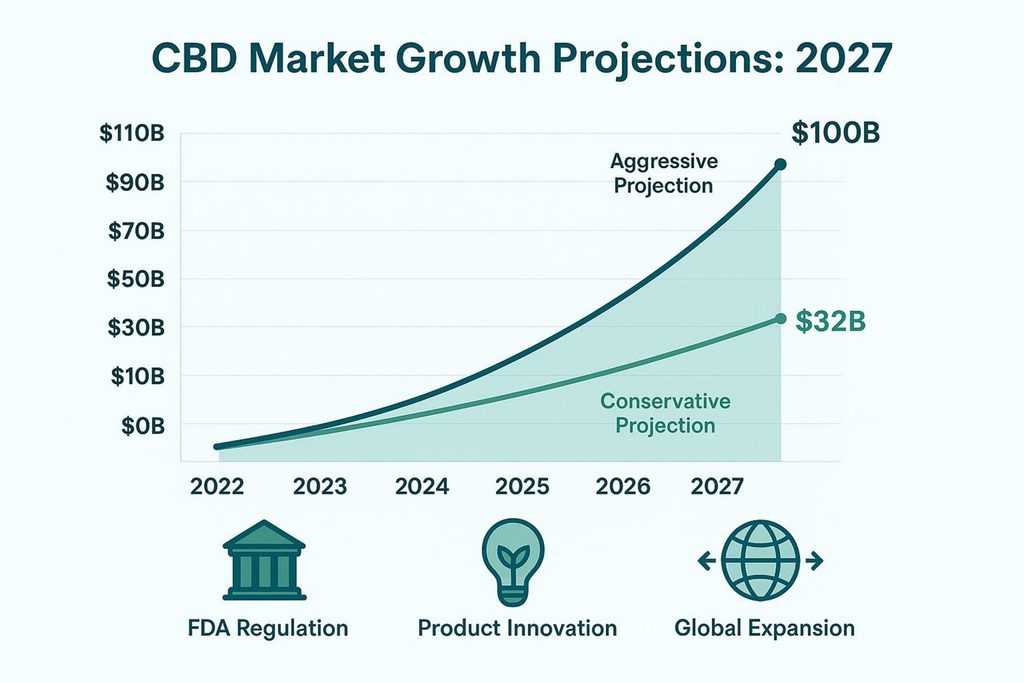
CBD market forecasts for 2027 show strong growth, but the exact number depends a lot on regulation. Lightspeed estimates the global CBD market could reach $31.85 billion by 2027. A more aggressive view from Global Market Insights, Inc. suggests it could exceed $108.8 billion, showing how much these forecasts can differ based on assumptions and models.
For the U.S. hemp-derived CBD market, Brightfield Group points to one major factor: federal rules. If the Food and Drug Administration (FDA) gives clear direction by 2024 and allows CBD as a dietary supplement and food additive, U.S. sales could reach $11.0 billion by 2027. Without that direction, sales are expected to be much lower-showing that rule changes could add around $4 billion in sales. Clear rules would likely speed up growth for ingestibles like capsules and gummies, and make it easier for big retailers to carry them. Beyond CBD, the full legal U.S. cannabis market (including THC) is projected to reach $45 billion in total legal sales by 2027, according to BDSA, which shows how much the wider cannabinoid category is expanding.
Market Segmentation: Dominant Products and Regions
By 2027, certain product types and regions are likely to lead the market. Ingestibles remain popular. Gummies and tinctures are currently the two most-used CBD product types, according to Brightfield’s US CBD Consumer Insights. Capsules and drinks also have strong upside, especially if rules become clearer. In 2020, oral CBD made up close to 45% of the market, often chosen because it can offer slower, steady relief.
Still, ingestibles are not the whole story. Cosmetics-such as creams and roll-ons-are expected to grow fast, with a projected CAGR of 35.8% through 2027. This is linked to CBD’s use in skin care and its anti-inflammatory qualities, which make it attractive for beauty and topical wellness products. North America is expected to stay the largest region. At the same time, places like Australia and the wider Asia Pacific region may grow quickly, helped by rising awareness and friendlier rules from local governments.
Competitive Landscape: Market Saturation Versus Opportunity
The CBD industry has recently been shaken up, with over 1,000 brands leaving the market in the past year. Many analysts saw this kind of “shakeout” coming, driven by consolidation and business failures. While that can look like saturation, the full category is still growing, just at a steadier pace. This points to a market moving from messy and fragmented to more stable and consolidated, where only well-run brands last.
For brands aiming to do well in 2027, the choice is clear: find ways to stand out or get pushed into commodity pricing. Competition is intense, so companies need clear reasons for people to pick them — new formulations, better quality, or a story that feels real. Until the FDA clearly allows ingestible CBD to sit next to standard consumer goods in mass retailers, brands must keep building products that are worth the “extra trip” to a specialty shop or online store. That pressure will shape competition and also create space for brands that truly innovate.
In a consolidating market, most operators end up with access to the same technology, so the difference comes down to execution. As Rad Paluszak from NON.agency puts it: “AI is only a tool. The question is not whether to use it, but how well you use it.” The brands that last will be the ones that turn shared tools into sharper positioning, faster testing, and content that actually sounds like them.
How Will Regulations Impact CBD Marketing Strategies?
Evolution of Global and US CBD Regulations
CBD rules are often confusing. In the U.S., the market has been stuck in “regulatory limbo” since the 2018 Farm Bill legalized hemp-derived CBD but did not clearly spell out how it can be sold and marketed. Even though groups like Brightfield Group have predicted FDA guidance year after year, full clarity still has not arrived. Brands and retailers have had to balance risk and growth without a clear federal green light.
Outside the U.S., rules vary by country but are generally moving toward more formal oversight. Friendlier rule updates in several regions are expected to support market growth. Australia, for example, proposed changes that could make CBD an over-the-counter Schedule 3 product, which could increase local adoption. In 2023, the FDA also said current CBD rules were not enough and announced plans to work with Congress on new ones. This means brands will need to keep up with federal and state changes, plus international updates, to stay compliant.
Anticipated FDA and EU Developments by 2027
In the U.S., the lack of formal approval for CBD as a dietary supplement or food additive remains a major blocker. The FDA has not made a final decision on CBD’s safety as a food additive, and that uncertainty limits how widely ingestibles like gummies and drinks can be sold in mainstream retail. By 2027, many in the industry expect clearer FDA rules that set firm standards for labels and marketing. These rules matter for safety and also to stop false claims that a product can prevent, treat, or cure disease.
In the European Union, rules are also still taking shape. Each member state can handle CBD differently, and EU-wide guidance continues to develop. Still, the broader direction-similar to the United Kingdom’s advertising approach-leans heavily on transparency and evidence-based marketing. On both sides of the Atlantic, the goal is a safer, more predictable market where customers can make informed choices and serious businesses can grow without constant uncertainty.
Adapting to Safer, Clearer Marketing Compliance
With rules changing often, a “compliance-first” approach is not optional for CBD brands. As 2027 gets closer, strong marketing plans will be built inside the boundaries of the latest rules. That means general wellness claims and structure/function claims must be backed by solid scientific research. Claims also need to match the research details-for example, a study using intravenous dosing cannot support a claim for an oral product.
Compliance also includes responsible education. Even if a full disclaimer like the NHS uses is not required everywhere, sharing limits of research is a smart way to reduce risk and build trust. And until the FDA allows ingestibles to be sold next to other everyday consumer products in mass retail, brands must focus on products that people trust enough to buy through specialty stores or online. Clear compliance and clear communication will remain central parts of reputable CBD marketing in 2027.
What CBD Product Trends Will Dominate the Market?
Rising Demand for Minor Cannabinoids and Functional Blends
CBD is no longer the only headline cannabinoid. By 2027, interest is expected to grow even more in other hemp-derived cannabinoids. Minor cannabinoids like CBN (often linked with rest and sleep) and CBG (often linked with focus) are shifting from “interesting extras” to common ingredients. Many products combine cannabinoids and terpenes to aim for the “entourage effect,” where compounds work together and may improve results.
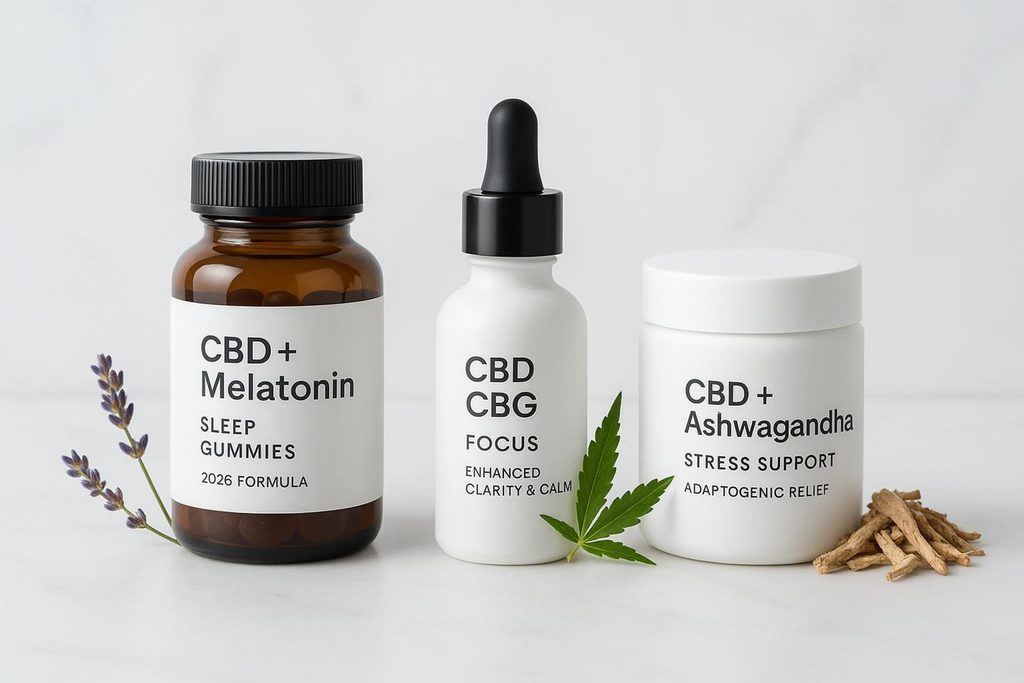
CBD is also being combined more often with nutraceuticals and adaptogens that have research behind them, like L-Theanine and Ashwagandha. These “functional blends” are built for specific needs such as stress support or daily wellness. Brands also add ingredients like melatonin to sleep gummies so they can speak more clearly about what the product is for, using existing FDA evaluations of those non-cannabinoid ingredients. This approach helps customers understand the product’s goal and can make CBD more appealing beyond general wellness.
Next-Generation Delivery Formats and Increased Bioavailability
New delivery methods are set to reshape the CBD market by 2027. Many buyers want products that work well but are also easy to use, discreet, and faster to kick in. The market is moving beyond basic oils and tinctures and into formats that aim to improve absorption and reduce time-to-effect. Oral sprays, fast-dissolving strips, and advanced inhalers are likely to grow, built for precise and discreet dosing.
Tech such as nanoemulsions, liposomal delivery, and transdermal patches is becoming more common. Nanoemulsified CBD, for example, has shown higher absorption than standard oil-based formats, which can lose strength as they pass through digestion. There is also more interest in microdosing-very small doses meant for mild relaxation, focus, or comfort without a strong noticeable effect. That trend supports growth in precise tinctures, consistent low-dose capsules, and pre-portioned edibles.
CBD in Wellness, Beauty, and Lifestyle Segments
By 2027, CBD is expected to be even more woven into wellness, beauty, and lifestyle categories. Topicals remain a major part of that, since CBD is used in skin care and is known for anti-inflammatory qualities. That is driving demand for creams, roll-ons, and similar products, with strong growth projected for the segment.
CBD’s use in mental well-being is also growing. The market value tied to anxiety and stress uses passed $1.5 billion in 2020, driven by global demand for mental health support. Edibles, especially gummies, and non-alcoholic CBD drinks are also gaining traction, offering a convenient and enjoyable alternative for people who want functional products without the psychoactive effects of THC. Because CBD fits into many daily routines, it continues to spread into more lifestyle habits.
Opportunities in CBD for Pets and Niche Demographics
Pet CBD is rising quickly and may be a major growth area in 2027. Many pet owners want natural options that support calm and general well-being. The numbers support this: almost three-quarters of current CBD consumers also own pets, and almost a quarter of U.S. pet owners already use CBD for themselves, their pets, or both. Around 26% of U.S. adults with dogs use hemp-CBD products, and about half of those use it for their dogs.
This group often cares a lot about quality and natural inputs, and using organic materials can support growth in pet products. Beyond pets, there is also room to grow in other niche groups. Younger adults (18-25) use CBD less than older adults, but simple education and clearer messaging can help close the gap. Products aimed at specific needs-like athlete recovery or long-term discomfort support-can also perform well. The main job is to understand what each group needs and communicate in a trustworthy way.
How Will Technology Transform CBD Marketing in 2027?
Personalization Through AI and Data-Driven Targeting
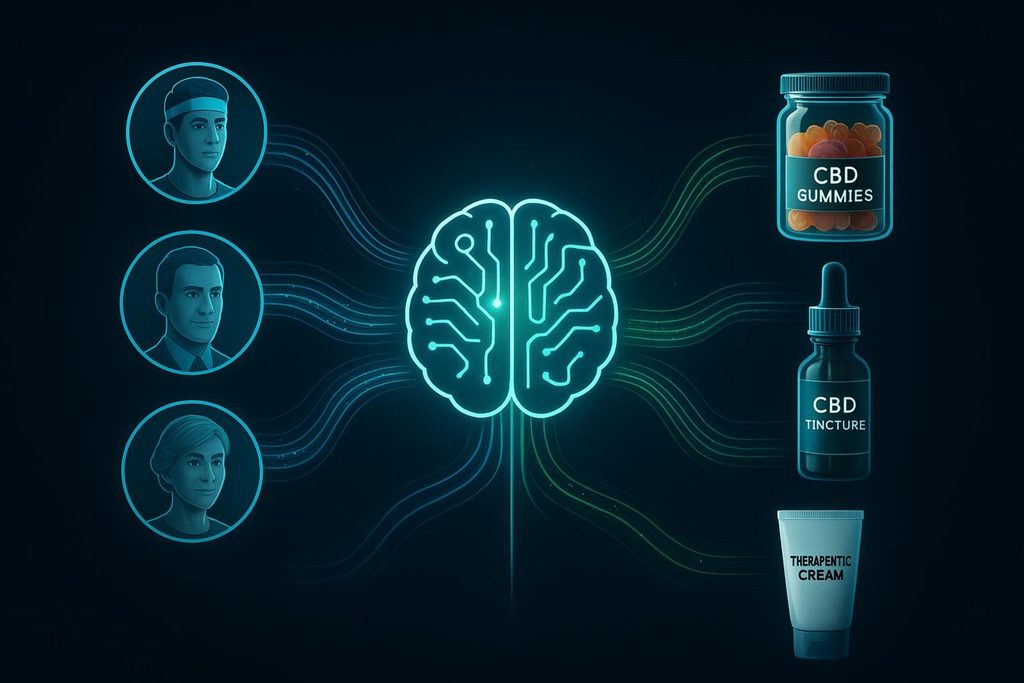
In 2027, AI and data will sit at the center of strong CBD marketing. Instead of broad messaging, brands will use more personal communication. Collecting and analyzing detailed purchase data will matter more for speaking to customers as individuals. This helps brands learn preferences, buying habits, and even wellness goals, then suggest products and content that match.
AI will support smarter targeting, helping brands reach the right people with the right message at the right time. This matters even more as search becomes more AI-driven and rewards helpful, trusted content.
As Rad Paluszak from NON.agency puts it: “Stop obsessing over keywords. Think about entities, brand context and semantic relationships.” For CBD brands, that means being consistently understood as a credible source on specific wellness topics, rather than chasing the same handful of high-volume phrases everyone else is bidding on.
Brands will use personalized email flows triggered by store purchases and website experiences that change based on user behavior. This makes the customer journey feel more personal and responsive, which can drive both sales and loyalty.
Omnichannel Retail: In-Store and Ecommerce Synergy
The line between online and in-store shopping will keep fading, and omnichannel will become the standard for CBD brands by 2027. Online sales offer clear benefits like delivery, large selection, and lower overhead. But CBD products often still need human explanation. Many shoppers have questions, and store staff can explain the differences between oils, supplements, and creams so people can choose with confidence.
The best approach blends both channels. For example, Lightspeed retailer SunMed, Your CBD Store, uses purchase data from physical stores to send educational emails the day after a visit. This keeps the learning process going after the customer leaves and supports stronger engagement. When physical stores and ecommerce work together, brands can improve the customer experience and increase conversion chances.
Leveraging Social Media, Influencers, and Content Platforms
Social media and content platforms will stay important for CBD marketing, but brands will use them in a more careful way. Because CBD ads often face restrictions, these channels matter for education, community building, and indirect marketing. Many successful retailers already mix social campaigns, helpful websites, in-store workshops, and email campaigns to share knowledge and build their brand story.
Influencer marketing will also stay effective, especially with micro- and nano-influencers who are trusted inside specific wellness communities. The focus is moving away from celebrity names alone and more toward credible voices that fit the audience. Content will stay central, with brands investing in articles, videos, and interactive tools that explain CBD, show product benefits, and address common myths. This helps customers learn and also supports brand credibility and long-term community growth.
Tracking ROI: Unified Payments and POS Innovation
Tracking ROI for CBD marketing will get more advanced through unified payment tools and point-of-sale (POS) upgrades. Having transaction data across online and in-store sales is key for understanding buyers, managing inventory, and improving marketing. Modern POS systems will connect more smoothly with ecommerce, giving a full picture from first contact to final purchase.
With one connected data set, brands can link sales to specific campaigns more accurately, spot best sellers, and plan around seasonal demand. For example, if outdoor-related products sell more in summer, or higher-volume purchases of flower or concentrates increase in winter, brands can plan inventory and promotions in a more informed way. This allows businesses to rely less on guesses and more on data, improving efficiency and long-term growth.
What Will Build Brand Trust and Customer Loyalty in the CBD Space?
The Growing Importance of Transparency and Lab Testing
In the CBD market of 2027, transparency is the base of trust and loyalty. Customers are better informed and want proof of quality, safety, and strength. Third-party lab testing and easy-to-find COAs are required for serious brands. People want quick access to clear details on potency, purity, and contaminants.
Leading brands are already acting on this. For example, Lightspeed retailer SunMed, Your CBD Store, creates its own CBD products and runs strict third-party tests, letting customers view lab reports directly. Clear labels, full ingredient lists, and high standards will help separate trusted brands from those chasing trends. In a space where false information spreads easily, lab proof is one of the strongest ways to build long-term customer confidence.
Impact of Sustainability and Ethical Sourcing
By 2027, many customers will judge CBD brands on more than results. Ethical choices will matter more for loyalty, and certifications like B Corporation status can help prove these claims. Environmental responsibility can include regenerative farming and more sustainable packaging.
Seed-to-sale traceability is another factor that signals quality and builds trust. People want to know where hemp is grown, how it is farmed, and how it is processed. Brands that can show verified ethical sourcing-such as organic hemp and cleaner production methods-will connect strongly with customers who care about social and environmental impact. This helps the planet, but it also supports brand reputation and repeat buying.
Customer Education and Tackling CBD Misinformation
Even though most people have heard of CBD, research shows many customers still do not understand dosing, product types, or what different CBD levels mean. This creates a challenge, but also a clear chance for brands to earn trust through education. In 2027, teaching customers will be a central part of many marketing plans.
Many retailers already use multiple channels-social posts, detailed websites, in-store workshops, and educational email series-to help people learn. Brands are building guides that explain cannabinoid basics, the “entourage effect,” and how to choose products for a routine. When brands act like reliable educators and correct misinformation, they help customers feel confident and supported, which improves loyalty over time.
What Challenges and Opportunities Will CBD Brands Face by 2027?
Navigating Regulatory Hurdles and Evolving Compliance
The biggest challenge-and also a major opening-for CBD brands in 2027 will still be regulation. Clear rules can speed up growth, while unclear rules can stall it. In the U.S., the FDA still has not issued full guidance for CBD as a dietary supplement or food additive. This uncertainty means brands must keep adjusting to changing compliance needs, which can differ across states and countries.
At the same time, brands that take compliance seriously can use it as a competitive advantage. Companies that stick to current rules, work with strong legal support, and plan for likely updates will be in a better position once clearer rules arrive. They will look more reliable in a market that still has credibility problems. The ongoing work between the FDA and Congress suggests a move toward more structure, which may be hard at first but can support stability and wider acceptance.
Maintaining Differentiation in a Crowded Marketplace
As the CBD market fills up, standing out will be a core challenge in 2027. Even with consolidation, there are still many products and brands, so a clear point of difference is required. Selling “a CBD product” is no longer enough. Brands need real reasons for customers to choose them.
Strong paths include focusing on minor cannabinoids and functional blends for specific needs, building new delivery formats with better absorption and easier use, or specializing in fast-growing segments like pet CBD or targeted beauty products. Brands that invest in R&D, listen to customers, and build a clear story around transparency, quality, and ethics will stand out more easily. Clear value and consistent delivery will decide who wins attention and who fades into commodity pricing.
Scaling Innovation and Responding to Consumer Demands
CBD innovation keeps moving fast, driven by more investment in research on cannabinoids and multi-cannabinoid formulas. By 2027, one challenge will be scaling innovation while keeping up with shifting customer needs. People want products aimed at outcomes like sleep, stress, discomfort, or focus. That forces brands to move quickly and stay close to customer feedback.
Brands that can predict demand and launch useful products will find growth opportunities. That can include planning around seasonal buying patterns, such as outdoor-focused items in summer or comfort-focused products in winter. Scaling innovation also means improving internal product development so new, effective, compliant formulas reach the market faster. Brands that repeatedly deliver what customers want-while keeping quality and ethics high-will be in a strong leadership position.
How Can CBD Businesses Prepare for the Future?
Actionable Strategies for Sustainable Growth
Getting ready for CBD marketing in 2027 takes planning and action across several areas. For steady growth, businesses should focus on what they do best and keep improving based on who the customer is and what they want. Verifiable trust should come first: independent certifications, batch-level testing, and strict quality checks for every product. Product development should be guided by real science, using ideas like the entourage effect to create products that deliver meaningful results. Education is also key-simple, honest resources help customers make better choices and can build loyalty over time.
It also helps to focus on what a brand can control, especially while rules remain unclear. That includes strong internal quality processes, clear supply chain management, and consistent messaging that matches the target audience. With these basics in place, CBD businesses can build a stable base that attracts and keeps customers who care about quality, transparency, and results.
Tips for Adapting To Market Shifts and Regulation Changes
The CBD market will keep changing, so businesses need flexibility and forward planning. A compliance-first approach is required. Brands must track rule changes in the U.S. and abroad, reduce risk early, and prepare for possible changes like FDA guidance on ingestibles.
At the same time, CBD is moving more into a science-led health category. Brands should keep investing in R&D to explore new cannabinoids, new delivery formats, and functional blends built for specific needs. An omnichannel setup-where online and in-store work smoothly together-will also matter for reaching different groups and providing better support. Businesses that build habits of adapting, learning, and partnering well can handle market changes and turn them into growth.
CBD Marketing in 2027: Key Takeaways From NON.agency
Looking toward 2027, NON.agency sees the CBD industry entering a new stage. The early “gold rush” mindset is being replaced by a more mature market where quality, compliance, and real consumer well-being come first. The brands that do best will be the ones that accept this change and act as trusted guides in their customers’ wellness routines.
CBD’s long-term upside is still strong, even with short-term hesitation and ongoing rule uncertainty. Success will depend on scientific honesty, clear lab-based transparency, and marketing that teaches instead of simply pushing ads. Brands also need strong digital skills, using analytics and AI to personalize experiences and stay visible in a crowded space. 2027 will reward brands that move fast, communicate clearly, and keep building a responsible name in CBD.